
By Zoe Bator
As ChatGPT and other AI capabilities become integrated into everyday life, film students are grappling with a rapidly evolving job market amid a media sector on strike.
“There’s fear of job loss and also anxiety about what audiences are being trained to find acceptable,” said Alissa Perren, professor of film business and expert on streaming services. “Are we always going to be able to differentiate what is AI-generated and what isn’t?”
On Sept. 13, after many Screen Actors Guild protests in Los Angeles over contract issues including the use of AI, the crusade was finally brought to Austin when protesters marched outside of Amazon headquarters at The Domain, begging the question: Has big tech gone too far?
Austin has long been a hub for film, TV and podcast production. According to Austin Relocation Guide, the city’s media sector has amassed nearly $2 billion in the last 10 years. However, Radio, Television and Film students now face an uncharted professional ecosystem where employers could be utilizing AI techniques to review their applications, to aid in editing processes or, in some cases, to do their jobs.
Yet, AI has also been recognized for being a time-saving and cost-effective tool, especially for young filmmakers who have other obligations and a limited budget.
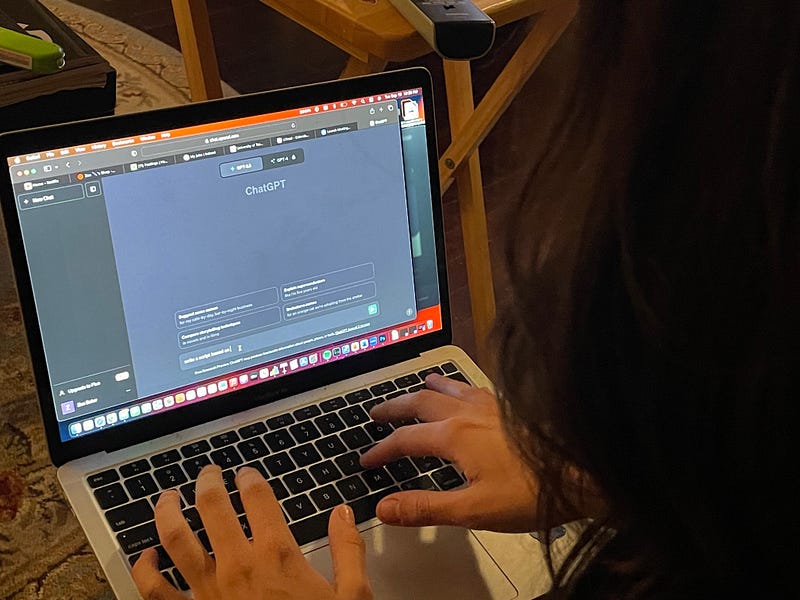
“AI undoubtedly is going to evolve, at least in some aspects, to be an excellent tool. Editing software like Premiere Pro and Final Cut Pro have already utilized artificial intelligence for small tasks like automatic color correction or multicam editing. Technology like this helps make editing more efficient; I personally save a lot of time on those tasks,” said Nolan Walley, a second year RTF student at the University of Texas at Austin.
However, its capabilities often depend on whose hands it falls into. Reports say that Disney’s subsidiary Marvel has recently utilized AI to create an intro for its new miniseries “Secret Invasion,” despite unparalleled access to a field of talented television creatives.
“It just looks ugly. That’s the biggest problem with AI right now, you can tell it’s AI and it feels yucky,” Walley said.
Right now, it’s not exceedingly difficult to detect when AI has created an image or tried to make video content. Many AI-generated humans look robotic; however, at the rate artificial intelligence is progressing, their capability to create realistic human features might grow.
“I’m OK with AI-generated projects being broken and ugly. It’ll be worse when we can’t tell,” Walley said.
Documentary film production company Back Roads Entertainment made the move to Austin in 2020. It focuses on creating unscripted and original content for all its projects. Valerie Grandjean, executive assistant at Back Roads, recognizes the pressing power of AI.
“We can see AI’s effects playing out already in how this writers strike is taking place and with (companies) now relying on AI to come up with names of TV shows or certain ideas and scripts. This will undoubtedly affect students freshly entering the field,” Grandjean said.
The privatization of the media market has exponentially increased in the past few years. Disney bought Hulu as well as Marvel, and Amazon now owns MGM Studios. The utilization of AI techniques by these companies, in addition to new models that minimize residual checks, exemplify media moguls’ efforts to cut out the middle-man in the line of production, ultimately to increase revenue.
“AI is not one thing. For example, there is a lot of anxiety from screenwriting students about AI because of its ability to write stories. Essentially, screenwriters could just be paid as contractors to revise. So, the concern is that it removes creative voice and agency,” Perren said. Actors are also worried about being deemed obsolete. The issue for them surrounds their image or likeness being sold and reproduced. “Could they only be compensated once and essentially be AI-generated for future projects? This could even go for deceased actors — are we going to start seeing John Wayne in films again?”
Currently, AI functions on this model of plagiarizing existing media without compensating any of the authors of the content it reformulates. It is ultimately unable to create anything original.
“I would not be surprised if within the next five to 10 years we see moves towards legislation requiring payment to the creators of the content used to generate AI responses,” said Craig Watkins, UT Austin professor and expert on the implications of artificial intelligence.
It will be very telling over the next year how AI will change the way we create and consume digital media.
“It needs to be front and center in everyone’s mind because this is where we’re going,” Perren said.
 Zoe Bator Portfolio